

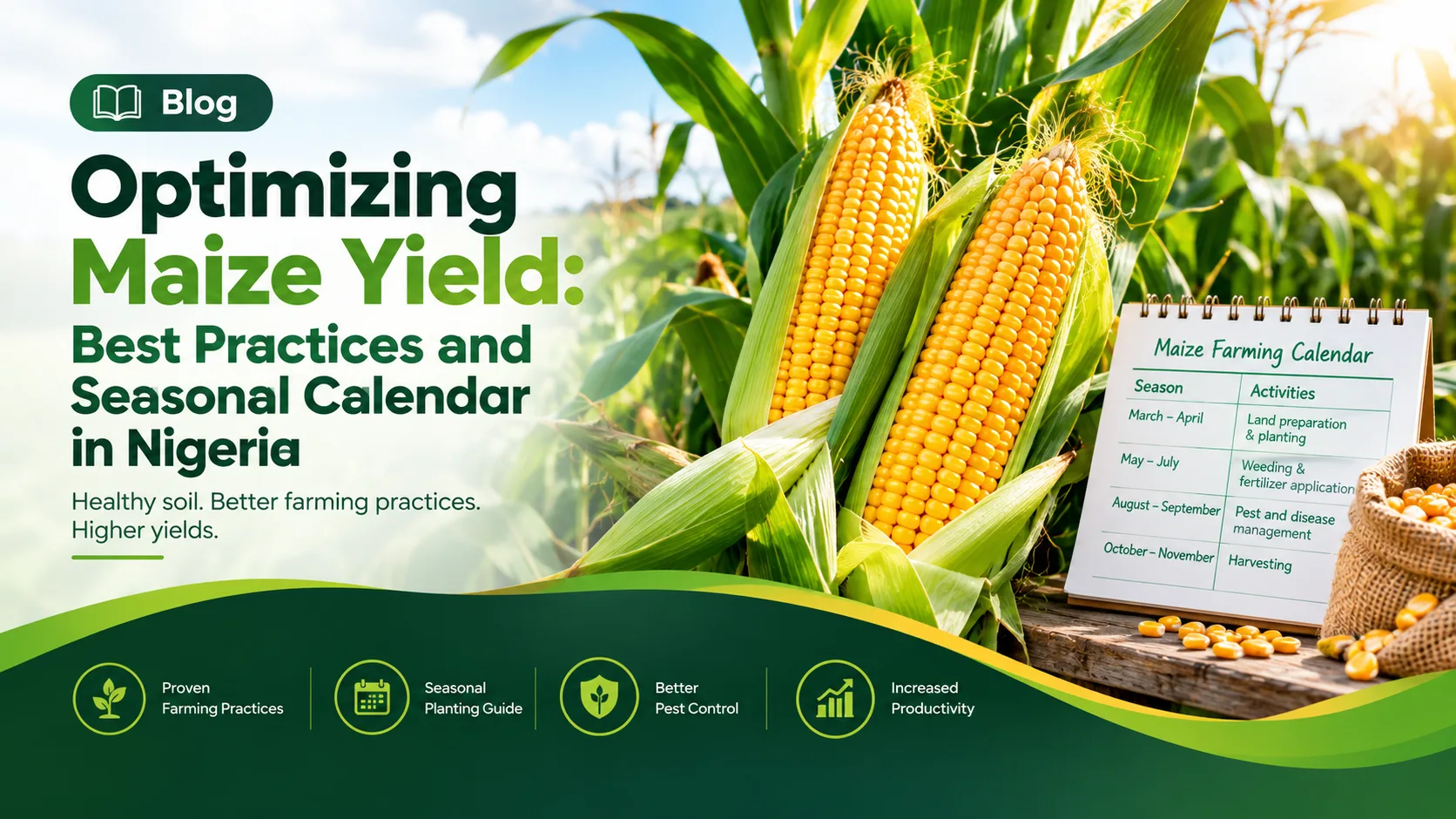
Here's a detailed overview of the agronomic practices and calendar for maize (corn) cultivation in Nigeria.
- Land Preparation (March – April): Select a well-drained fertile soil, preferably sandy loam soil. Clear the land of weeds and debris. Plow and harrow to create a fine seedbed, usually done before the onset of the rainy season.
- Seed Selection and Treatment (March – April): Choose high-quality seeds of recommended varieties suited to local agro-ecological zones. Source planting materials from reputable organizations like the State Ministry of Agriculture and Natural Resources, Federal Ministry of Agriculture and Food Security, Agricultural Development Project of each State, Agricultural Research Institutes, and the National Seed Center (NSC). Treat seeds with fungicides and insecticides to protect against seed and soil-borne diseases.
- Planting (April – July): Maize is planted at the beginning of the rainy season, which varies across Nigeria but generally spans from April to July. Plant seeds at a depth of 3–5 cm and spacing of 75–90 cm between rows, with 20–25 cm between plants within rows, at a maximum of 2 seeds per hole. Seed rate: 25kg/ha.
- Fertilization (2 weeks after planting, and June – August for top dressing if needed): Apply fertilizers based on soil test recommendations and crop requirements, typically NPK 15-15-15 at planting and during early growth stages: 200kg/ha two weeks after planting, then 150kg/ha of urea 6–8 weeks after planting.
- Weed Control (June – August): Remove weeds manually or use appropriate herbicides. Early weed control is critical to prevent competition for nutrients, water, and sunlight. Apply Primextra at 4 litres/ha as a pre-emergence herbicide within 3 days after planting.
- Water Management (June – August): In regions with unreliable rainfall, supplement with irrigation, especially during critical growth stages such as flowering and grain filling. Adequate soil moisture is crucial for optimal maize growth and yield.
- Pest and Disease Management (June – August): Monitor and control pests such as stem borers, fall armyworms, and maize weevils using integrated pest management (IPM) practices. Prevent and manage diseases like maize streak virus, downy mildew, and rust through resistant varieties, cultural practices, and appropriate fungicide applications.
- Harvesting (August – October): Maize is harvested when cobs reach physiological maturity, typically 3–5 months after planting, depending on variety and local conditions. Dry maize promptly to reduce moisture content to safe levels (below 14%) to prevent mold growth and maintain quality.
- Post-Harvest Management (August – October): Store dried maize in well-ventilated structures or bags to protect against pests and maintain grain quality. Check stored maize regularly for signs of pests, mold, or moisture.
- Crop Rotation and Residue Management (October – December): Rotate maize with legumes or other crops to improve soil health and reduce pest and disease pressure. Manage crop residues to minimize disease carryover and improve soil structure. Conduct soil tests to determine nutrient deficiencies ahead of the next cropping cycle.
The calendar and agronomic practices outlined above cover the typical steps and timings for maize cultivation in Nigeria, emphasizing the importance of adapting practices to local conditions and continuous monitoring for optimal yield and quality.
Expected yield from sole cropping: 4 – 5 tons per hectare.
Need Quality Maize Or Feed Grain?
Talk to our team about sourcing healthy maize for your farm or feed mix.
Chat On WhatsApp